
Mexico can be an attractive market for international brands, but entering it does not mean that every company needs to build a complete local operation from day one.
For many suppliers, the first step should be simpler: understand the market, evaluate the product opportunity, identify the right commercial channel, and define what operational support is actually required.
That is where a local commercial partner can make the difference.
Start with product fit, not infrastructure
A common mistake when entering a new market is to begin with infrastructure before validating the commercial opportunity.
Warehousing, inventory, marketplace accounts, logistics, pricing, and customer support all matter, but they should follow a clear understanding of whether the product is a good fit for the Mexican market.
A practical evaluation should consider factors such as:
- Product category and positioning
- Expected demand and target customer
- Import feasibility and documentation
- Product restrictions or special requirements
- Inventory strategy
- Local pricing range
- Packaging and handling needs
- Suitable sales channels
The objective is not simply to make a product available in Mexico. The objective is to define a commercial route that makes sense for the product and the supplier.
IMX begins with this evaluation before defining the next operational steps.
Choose the right route to market
There is no single sales channel that works for every product.
Depending on the category, positioning, inventory strategy, and commercial opportunity, a brand may use one or several routes.
Ecommerce
Products that fit the IMX commercial strategy can be evaluated for ecommerce exposure and local sales support.
This route can help international suppliers reach customers in Mexico while working with a local commercial structure instead of building every capability independently.
Marketplaces
Marketplaces can provide significant visibility, but successful participation requires more than simply publishing a product listing.
Product information, pricing, inventory availability, marketplace requirements, and local customer expectations all influence performance.
The appropriate marketplace strategy should be evaluated according to the product, target audience, pricing, and positioning required in Mexico.
Direct sales
Some products are better suited to direct commercial opportunities rather than a purely ecommerce-driven strategy.
For these cases, IMX can evaluate how the product may fit direct sales opportunities or a combined commercial route.
The appropriate channel is defined after reviewing the product and the opportunity.
Plan inventory after the commercial route is clear
Inventory is one of the most important decisions when entering another country.
Too little inventory can limit the ability to serve customers. Too much inventory can create unnecessary storage costs and commercial risk.
The right approach depends on product characteristics, expected demand, sales channels, handling requirements, and delivery needs.
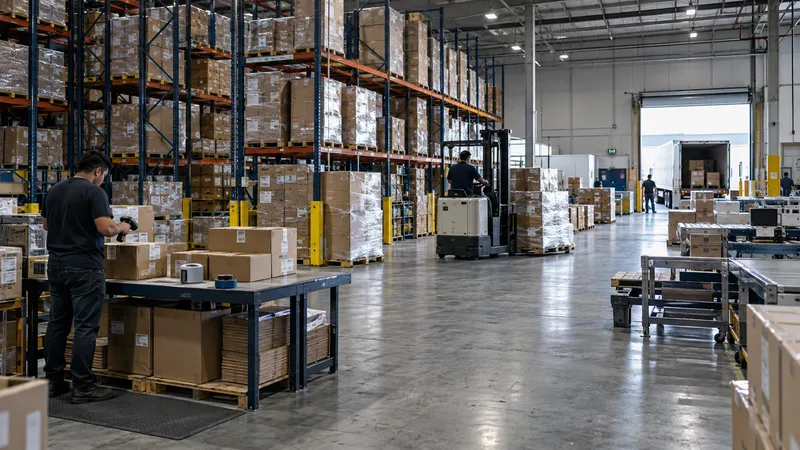
For approved opportunities, local warehousing and fulfillment options can be evaluated according to the commercial strategy.
This may include receiving inventory, organizing products, preparing orders, labeling, packing, and coordinating the handoff to the selected delivery route.
Prepare for local fulfillment and delivery
Selling a product and delivering it successfully are two different challenges.
Once inventory is available in Mexico, orders may require:
- Product-specific handling
- Picking and packing
- Shipping labels
- Local delivery coordination
- Destination coverage review
- Post-sale follow-up
The appropriate logistics model depends on the product and the selected commercial channel.
Not every product requires the same infrastructure, which is why operational planning should follow commercial validation rather than precede it.
Adapt product information for Mexican customers
A product that performs well in another country may still require adjustments before being presented to customers in Mexico.
Product titles, descriptions, specifications, images, pricing, positioning, and marketplace information should be prepared for the local commercial context.
This does not necessarily mean changing the product itself.
It means making sure that Mexican buyers can understand what the product is, why it is relevant, and what they should expect when purchasing it.
Clear product information also helps reduce customer questions and supports a better post-sale experience.
Keep local customer communication in mind
Customer experience does not end when an order is placed.
Questions about products, delivery, availability, specifications, or post-sale issues require local communication and follow-up.
A local commercial partner can act as a bridge between the international supplier and customers in Mexico, helping manage product information, market feedback, customer questions, and operational needs.
This local layer can be especially valuable for brands that want to test Mexico before establishing their own local team.
Validate before making a larger commitment
Entering Mexico does not have to begin with a large investment in local infrastructure.
A more practical sequence is:
- Share the product and business information.
- Evaluate product fit and import feasibility.
- Review the commercial opportunity.
- Select the appropriate sales channel.
- Define inventory and operational requirements.
- Prepare the product for the Mexican market.
- Launch through the selected commercial route.
- Review results before expanding.
This allows international brands to make decisions based on real commercial requirements rather than assumptions.
Can any product be launched in Mexico?
No.
Submitting a product does not guarantee approval or launch.
Each opportunity should be reviewed according to its category, demand potential, import feasibility, documentation, inventory requirements, logistics needs, and commercial fit.
Some products may require additional documentation or operational preparation. Others may not fit the available commercial channels or current strategy.
The purpose of the evaluation process is to identify these factors before making larger commitments.
A practical first step into Mexico
For an international brand, entering Mexico does not necessarily require building an entire local organization before testing the opportunity.
The first step can be much more focused: evaluate the product, understand the market, choose the right commercial route, and determine what local support is actually needed.
IMX helps international suppliers work through that process with a Mexico-focused commercial and operational approach.
If you have a product or catalog that may have potential in Mexico, the next step is to share the opportunity with IMX for an initial review.